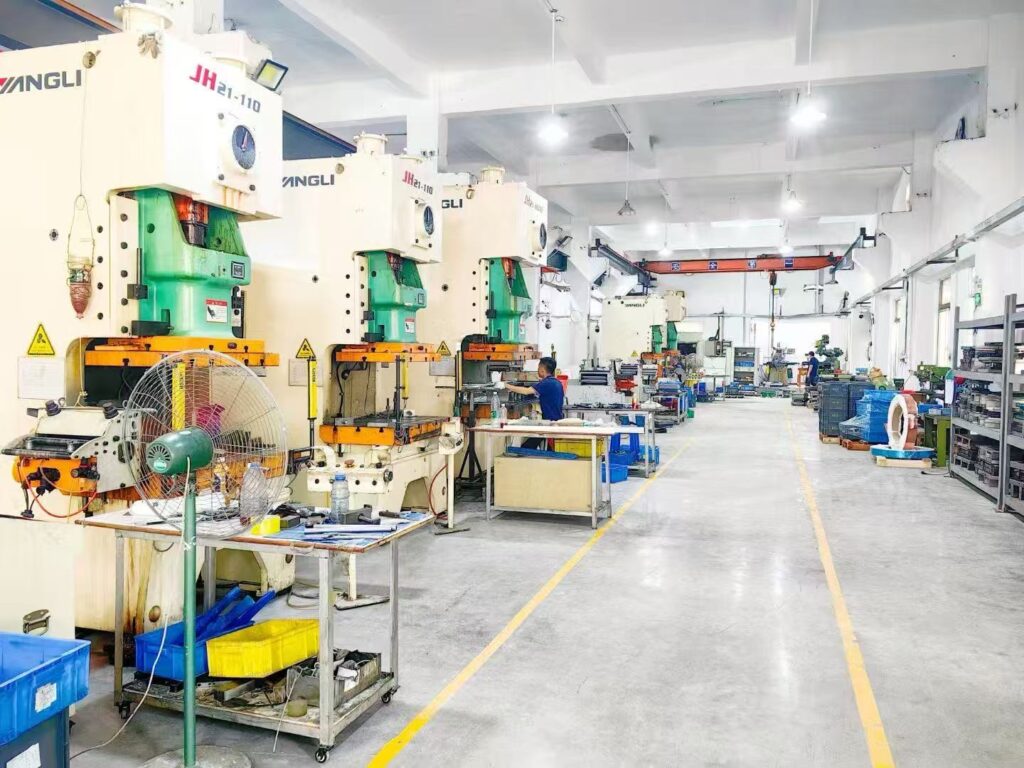
Custom Precision Sheet Metal Stamping
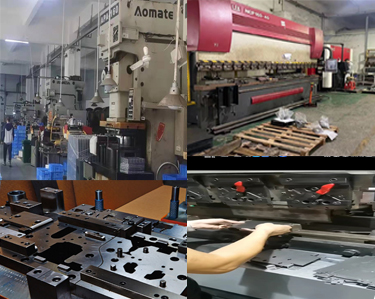
We are professional manufacturer in custom precision sheet metal stamping|OEM metal stamping service with more than 10 years stamping experieces,We can help you save cost for your projects
Compared to machining and other methods of plastic working, stamping offers numerous unique advantages—both technically and economically. These advantages are primarily manifested as follows:
(1) Stamping boasts high production efficiency and is easy to operate.
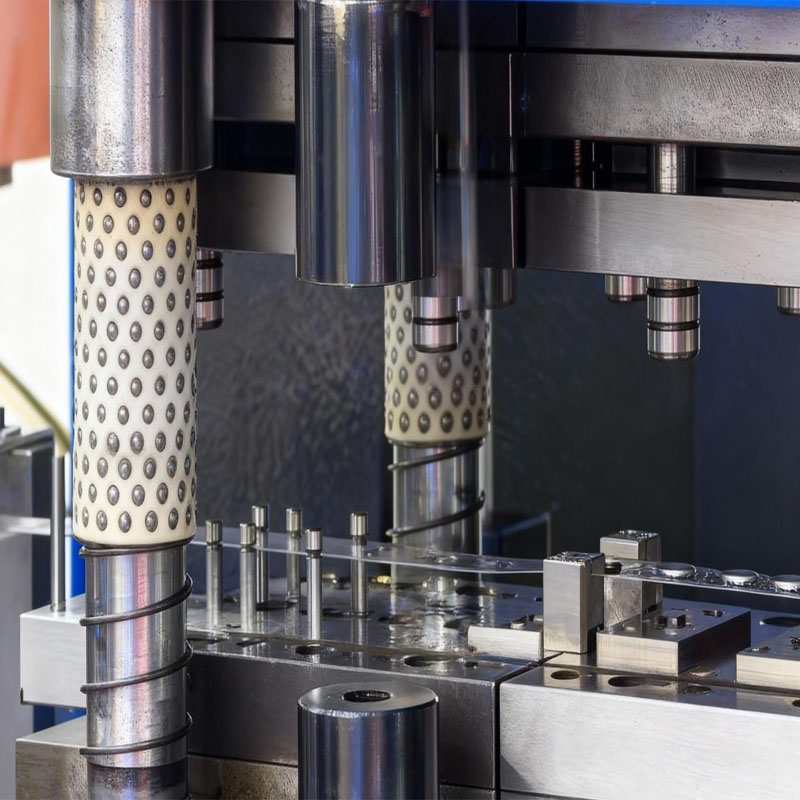
(2) The dimensional and geometric accuracy of stamped parts is ensured by the die during the stamping process; consequently, the quality of stamped parts is consistent, their interchangeability is excellent, and they possess the characteristic of being “identical to one another.”
(3) Stamping enables the production of parts with a flexible range of dimensions and relatively complex shapes.
(4) Stamping minimizes material consumption, thereby conserving material and resulting in lower production costs for the stamped parts.
01
What are the advantages for custom metal stamping
- Production Efficiency: The molding cycle time is as short as 1 second per unit, making it ideal for assembly line operations.
- Precision Control: Mold-based forming guarantees dimensional tolerances within ±0.05 mm.
- Batch Requirements: Due to high mold development costs, this process is economically viable only for batch sizes (MOQ) of 5,000 units or more.
- Free samples are provided upon completion of the mold.
02
Material Selection Recommendations
Primarily applicable to metal sheets with a thickness of 0.4–2 mm, including:
Carbon steel sheets (accounting for approximately 45%)
Stainless steel sheets (for corrosion-resistant components)
High-strength steel
Aluminum alloys
Aluminum-magnesium alloys (for lightweight applications)
Copper/Zinc sheets (substrates for electronic components)
03
Limitations in Custom Stamped Part Design
Dimensional Constraints: Maximum processing dimensions are limited by the machine table size.
Shape Complexity: For every 10% increase in stamping depth, the forming time increases by 15%–20%.
Material Ductility: High-hardness materials require an additional annealing step.
(1) The designed stamped parts must satisfy the product’s functional and technical performance requirements, while also facilitating assembly and repair.
(2) The design of stamped parts must contribute to maximizing the utilization rate of metal materials, minimizing the variety and specifications of materials used, and reducing material consumption to the greatest extent possible.
(3) The shape and structure of the designed stamped parts should be rational, thereby facilitating the simplification of die structures and processing sequences, minimizing the need for supplementary processing via other methods, and optimizing the stamping operation itself.
(4) While ensuring proper functionality, the design of stamped parts should aim for lower requirements regarding dimensional accuracy and surface roughness grades; this facilitates product interchangeability, minimizes scrap rates, and ensures consistent product quality.
(5) The design of stamped parts should facilitate their processing using existing equipment, tooling, and manufacturing processes whenever possible, and should also contribute to extending the service life of the stamping dies.
04
Application Fields of Custom Stamped Parts
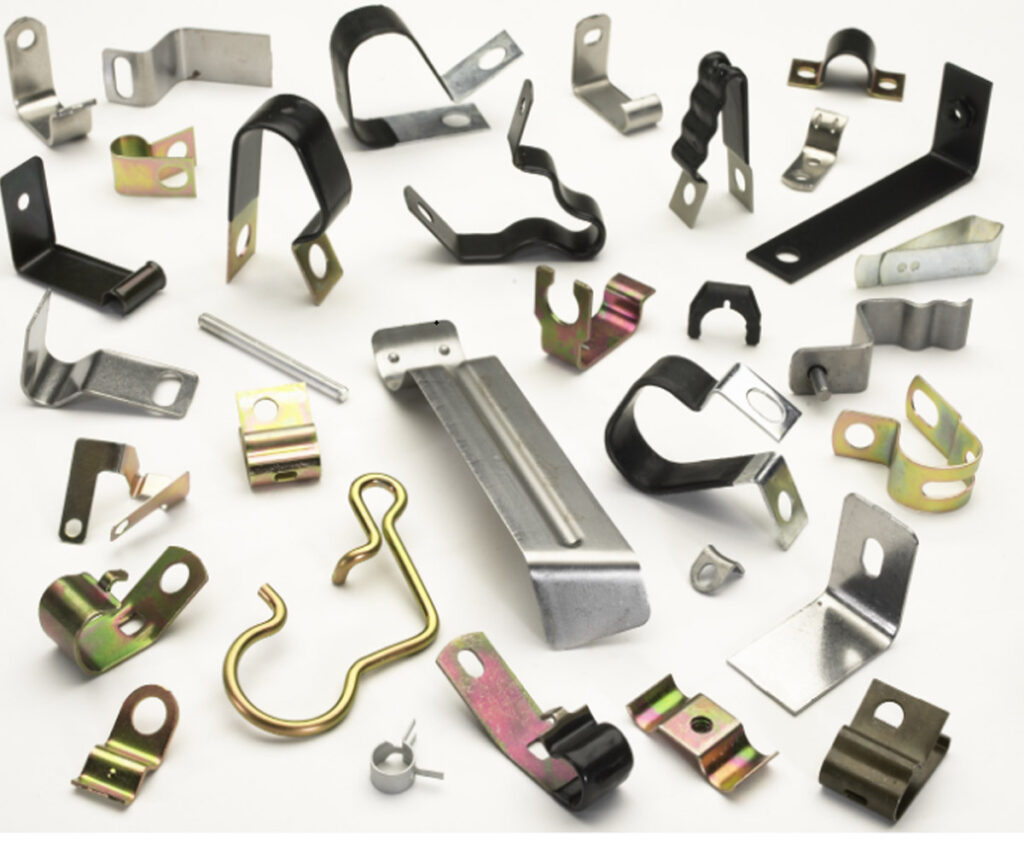
Stamped parts are widely utilized across various sectors, including automotive, home appliances, electronics, construction, medical equipment, and aerospace. Among these, automotive manufacturing constitutes the largest market, encompassing critical components such as vehicle bodies and chassis. The home appliance industry relies on stamping for the production of housings and structural components, while the electronics sector employs it to fabricate precision metal assemblies. Furthermore, construction hardware, medical equipment, and aerospace industries extensively leverage stamping technology to achieve high-strength, high-precision mass production.